Guide
How to Choose a Memory Supplement: A Label-First Checklist, With MemoPryl Scored
Start with the back of the bottle, not the ad. A memory supplement worth a look prints every amount, uses doses close to the studies, flags herbs that clash with medicines, and makes no disease claims. MemoPryl passes some checks and fails others, mostly because its amounts are not public.
Written by the MemoPryl editorial teamUpdated
The four moves
What should you look for in a memory supplement?
Proof on the label comes first. Ads, star ratings and famous faces come last.
- 01
Find the Supplement Facts panel
Every ingredient should have an amount next to it. No panel, no comparison.
- 02
Hold the amounts up to the studies
Research names a dose and a length of use. Check whether the label gets close.
- 03
Bring the list to your pharmacist
Some herbs weaken prescription drugs. Some ingredients act like drugs themselves.
- 04
Check the seller, not the ad
Look for a real listing, clear returns and a label that matches the photos.
Set expectations
Do memory supplements work?
For most people, the honest answer is "not much, and not reliably." No supplement has direct evidence of preventing Alzheimer's disease or other dementias (NCCIH, Supplements for cognition).
A few single ingredients have small human trials. Most are short, or done in people who already have memory problems. Blends are rarely tested as blends.
Memory changes that affect daily life deserve a visit, not a bottle. Low vitamin B12, medicines and depression can all affect memory (MedlinePlus, Memory loss). See our memory health guide.
Check 1 and 2
Does the label show every amount and a serving size?
It should. Without an amount beside each ingredient, you cannot compare a product with research.
Every ingredient has a number
Milligrams or micrograms per serving, a serving size and directions. Each line can be checked against a study.
A blend with one total, or no panel at all
A "proprietary blend" shows one combined weight, hiding each part's amount. No panel at all tells you even less.
Also look for other ingredients, label warnings, a lot number and an expiration date.
Check 3
Do the doses match what studies used?
Compare each amount with the trials. A sprinkle of a studied herb is not the studied herb.
| Ingredient | What studies used | What the research found |
|---|---|---|
| Bacopa | Usually 300 mg a day (250-600 mg) for about 3 months | Small improvements in many small trials (ADDF, Bacopa) |
| Phosphatidylserine | 80-500 mg a day; most trials under 6 months | Slight effects, too small to be clinically relevant (ADDF, Phosphatidylserine) |
| Acetyl-L-carnitine | 1-3 g a day in people with mild decline | Gains at 12 and 24 weeks, not at 52 (NIH ODS, Carnitine) |
| Ginkgo | Large studies, one lasting about 6 years | No drop in dementia risk (NCCIH, Ginkgo) |
| Huperzine A | 0.2-0.4 mg (200-400 mcg) a day in dementia trials | Small, short, high-bias trials (ADDF, Huperzine A) |
| Alpha-GPC | 1,200 mg a day in dementia trials | No studies in healthy people (ADDF, Alpha-GPC) |
Note the gram-sized acetyl-L-carnitine doses. A capsule with many ingredients often cannot hold study doses of all of them.
Check 4
Which supplement herbs interact with prescription drugs?
St. John's wort is the big one. It can weaken many medicines and interact in dangerous, sometimes life-threatening ways.
NCCIH lists some antidepressants (serotonin side effects), birth control pills, cyclosporine, some seizure drugs, digoxin and ivabradine, some HIV and cancer drugs, warfarin and some statins (NCCIH, St. John's wort). It may be unsafe in pregnancy. Ask your pharmacist before the first dose if you take any prescription medicine.
The herb is studied for low mood, not memory (NCCIH, St. John's wort). A memory formula that contains it should warn about interactions in plain words. Ginkgo may also raise bleeding risk with warfarin (NCCIH, Ginkgo). See the St. John's wort interaction list.
Keep taking your prescribed medicine until a pharmacist or doctor has answered.
Ready to try MemoPryl?1 bottle $39.00 on the live listing · free standard shipping · 30-day returns
Order nowCheck 5
Which memory supplement ingredients act like drugs?
Huperzine A is the clearest case. It works in a similar way to most prescription Alzheimer's drugs (ADDF, Huperzine A).
It may worsen the side effects of donepezil-type drugs, might lower heart rate and might worsen some epilepsy (ADDF, Huperzine A).
- Taking a dementia drug, or have a slow pulse? Ask your prescriber first.
- Seizure disorder? Ask first. Acetyl-L-carnitine has also caused seizures in that group (NIH ODS, Carnitine).
Drug-like ingredients sometimes appear only in small print or a seller's item details. See our huperzine A profile.
Check 6
What do the FDA and FTC rules mean for memory supplement claims?
No agency approves supplements before sale, and the FTC wants evidence behind health claims.
No pre-market approval
The FDA has no authority to approve dietary supplements before they are marketed (FDA, Supplement Q&A).
A registered facility is not an approval
Registering a facility does not mean the FDA approved the product made there (FDA, Approval myths).
Claims need science, not stories
The FTC says health claims need competent and reliable scientific evidence, and testimonials cannot replace it (FTC, Health claims).
Disease claims are a warning sign
The FTC and FDA have warned sellers making Alzheimer's and dementia treatment claims. Their summary: a cure-all often turns out to be a cure-nothing (FTC, Alzheimer's claims letters).
A supplement label may say it "supports" a body function, with an asterisk and the FDA statement. It may not say it can cure, treat or prevent a disease.
Checks 7 and 8
How do you spot fake reviews, celebrity ads and look-alike products?
Treat them as unproven until you can trace them to a real buyer, seller and label.
Fake or bought reviews
The FTC rule bans fake and AI-generated reviews and testimonials (FTC, Fake reviews rule). Watch for bursts of reviews, check reviewer history, and do not assume you can spot fakes by eye (FTC, Online reviews).
Celebrity and TV faces
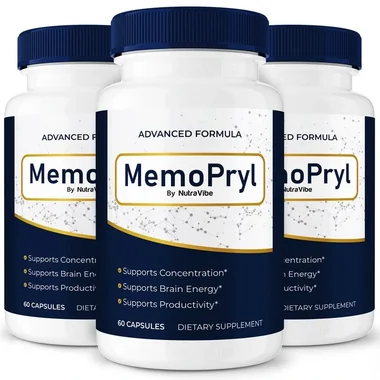
Memory pill ads often borrow famous faces without permission. No celebrity, including Bill Gates, is connected to MemoPryl. See our fake-ad guide.
Same name, different bottle
Several sellers use the MemoPryl name, sometimes for different formulas. And MemoPryl is not metoprolol, a prescription beta blocker.
Countdown timers and "only today" bundles are pressure, not proof.
Fair scoring
How does MemoPryl score on the label-first checklist?
Mixed: clear on price, returns and ingredient names, weak on amounts and warnings.
| Check | Result | Why |
|---|---|---|
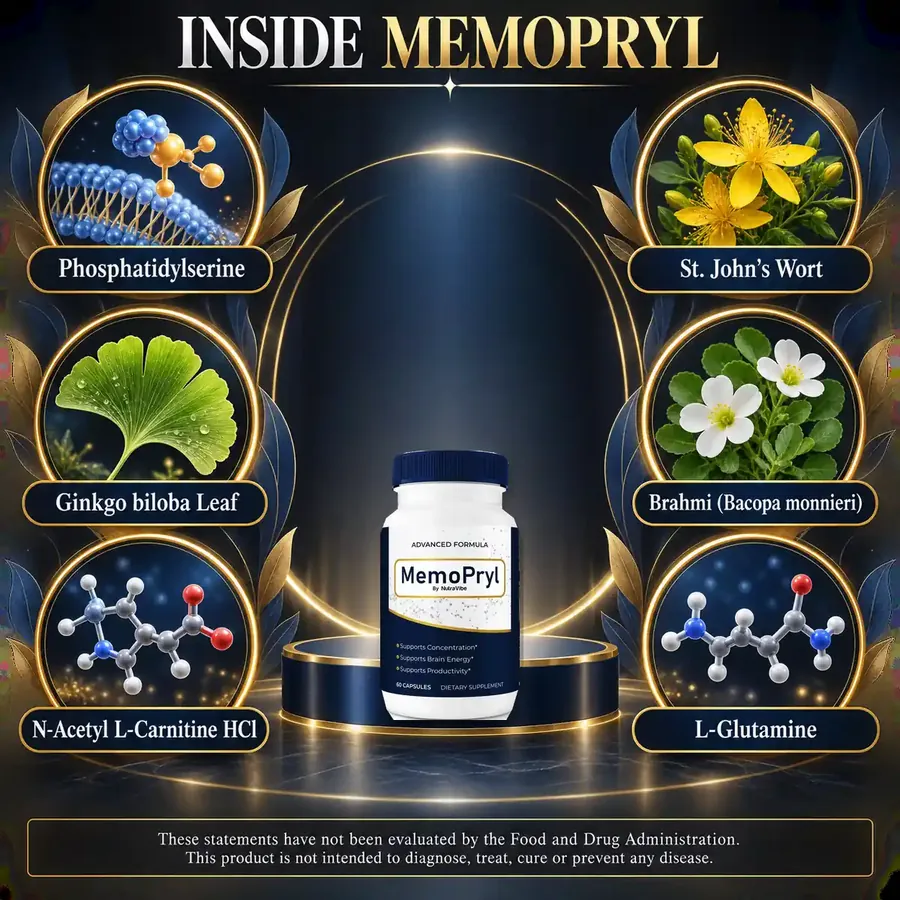
| 1. Ingredients named | Partial | Six on brand graphics; the eBay seller lists alpha-GPC and huperzine A as well |
| 2. Amounts and serving | Not published | We have not seen a Supplement Facts panel for either label version |
| 3. Doses vs studies | Not published | Cannot be checked without amounts |
| 4. Interaction warning | Fail | Contains St. John's wort; no warning appears on any image we have |
| 5. Drug-like ingredients | Caution | Huperzine A, listed by the eBay seller |
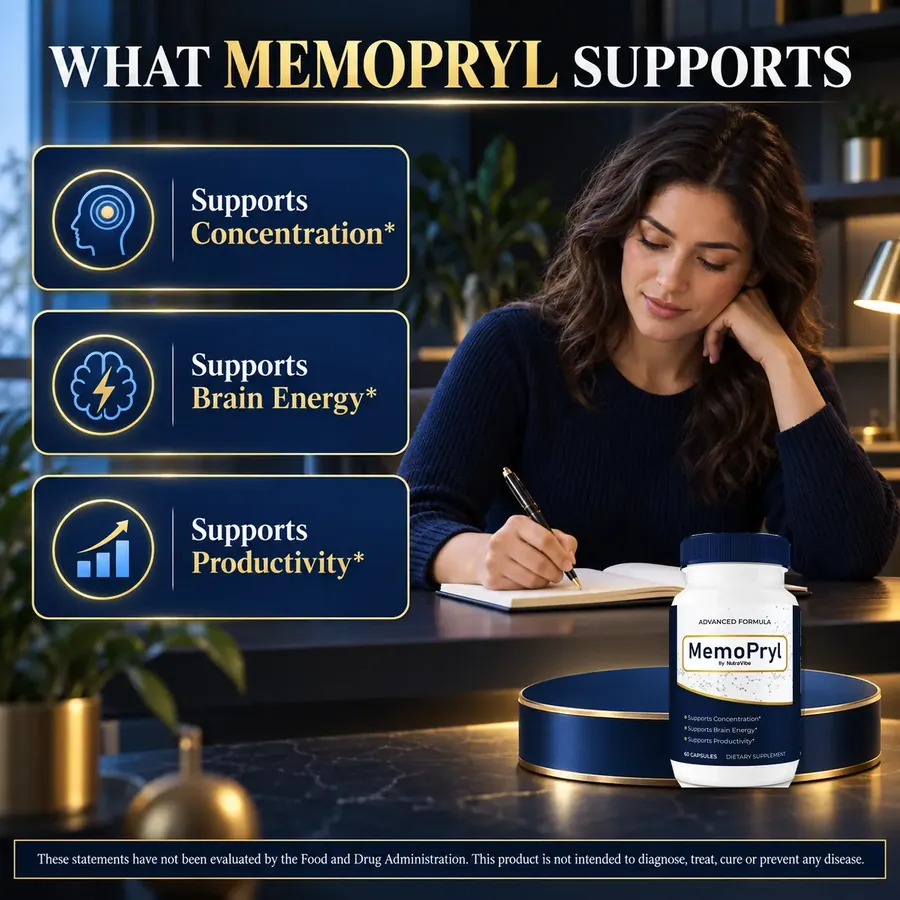
| 6. Claims | Partial | "Supports" claims with an asterisk and the FDA statement; no disease claims on the bottles |
| 7. Reviews and ads | Pass | No reviews or star scores published here until verified; no celebrity link |
| 8. Seller and label match | Partial | Live listing, $39.00, 30-day seller-paid returns, stock dated 08/2027; two label versions exist |
Counts in its favor
- Bacopa, phosphatidylserine and acetyl-L-carnitine have human research
- A dated price and seller-paid returns
Counts against it
- No public amounts, so no dose comparison
- An interaction-heavy herb with no label warning
Still interested? Ask a pharmacist first, then compare your bottle with our label page.
FAQ
Choosing a memory supplement: FAQ
What should I look for when buying a memory supplement?
Look for a Supplement Facts panel with an amount beside every ingredient, doses close to published studies, clear interaction warnings, and no disease claims. Then check the seller: a real listing, a written return policy and a label that matches the photos. Ads and star ratings matter least.
Do memory supplements that actually work exist?
A few ingredients have small, short human trials, but no supplement has strong proof of protecting memory. Bacopa shows small effects at about 300 mg a day over three months (ADDF, Bacopa). Supplements lack direct evidence of preventing dementia (NCCIH, Supplements for cognition), so see a doctor about real memory changes.
Which supplement ingredients interact with prescription drugs?
St. John's wort tops the list. It can weaken birth control pills, warfarin, some antidepressants, some heart, HIV, transplant, seizure and cancer drugs, and some statins (NCCIH, St. John's wort). Ginkgo may add bleeding risk with warfarin (NCCIH, Ginkgo), and huperzine A adds to dementia drugs (ADDF, Huperzine A).
How can I tell if supplement reviews are fake?
You often cannot tell by eye, so be careful with any glowing review. The FTC suggests watching for sudden bursts of reviews and checking each reviewer's history (FTC, Online reviews). Fake and AI-generated reviews are now banned under an FTC rule (FTC, Fake reviews rule).
Does the FDA test memory supplements before they are sold?
No. The FDA does not have the authority to approve dietary supplements before they reach the market (FDA, Supplement Q&A). The maker is responsible for safety and labeling. A badge saying "FDA registered facility" refers to a registration, which is not a product approval (FDA, Approval myths).
Are expensive memory supplements better than cheap ones?
Not by default. Price tells you nothing about dose, evidence or safety. A costly bottle with a hidden blend gives you less to check than a plain one with every amount printed. Compare labels, interaction warnings and return terms, then decide what the bottle is worth.
Who wrote this
Written and reviewed by
Plain-language pages built from the label, the sales page and linked public health sources.
Last updated . Read our editorial standards and how we check reviews. This website is run by a U.S. stocking partner that sells MemoPryl, not by the maker (the pack shots say "By NutraVibe"). We earn money when you buy through our order links.
Keep reading
More about MemoPryl
Memory health guide
Typical memory changes vs warning signs, treatable causes, doctor visit prep and where a supplement like MemoPryl fits.
Read moreIngredients
All eight MemoPryl ingredient names, where each one comes from, and the two that need a medicine check.
Read more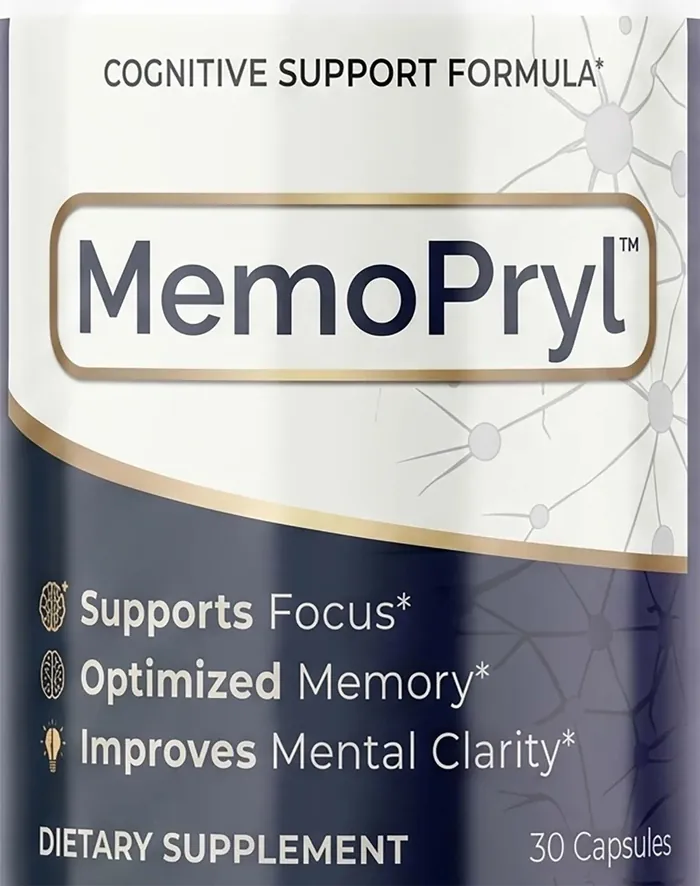
Side effects
Every reported side effect and drug interaction for MemoPryl's eight named ingredients, with when to stop and when to call 911.
Read moreU.S. stocking partner for MemoPryl
Ready to try MemoPryl?
The live listing sells single 30-capsule bottles for $39.00 with free standard shipping and 30-day returns, the seller paying return postage.
- Secure checkout
- 30-day window
- Ships from the U.S. with tracking